Executive Summary
Industrial procurement is the end-to-end process of acquiring the goods, works, and services required to build, operate, and maintain industrial assets such as factories, plants, utilities, EPC projects, oil and gas facilities, and heavy industrial operations.
It is far more than simply “buying.” Industrial procurement combines technical requirements, sourcing strategy, supplier evaluation, contract management, logistics coordination, compliance, risk control, and performance management across the full procurement lifecycle.
A practical way to understand industrial procurement is as a Procure-to-Pay (P2P) system that manages everything from identifying a business need to final payment and supplier performance review. In industrial environments, this process must be tightly controlled because procurement decisions directly affect cost, schedule, quality, safety, and operational reliability.
Most procurement failures in industrial projects are caused by a relatively small group of recurring issues: unclear specifications, supplier capability gaps, long lead times, quality failures, logistics errors, documentation problems, and unmanaged commercial or compliance risks.
That is why effective industrial procurement depends on repeatable controls: well-defined requirements, disciplined supplier qualification, structured RFx processes, contracts aligned to risk, inspection and expediting systems, and ongoing supplier performance management.
For companies operating in the UAE, procurement also requires local execution knowledge — including supplier verification, import documentation, regulatory compliance, product conformity requirements, and, where relevant, ICV-related considerations.
Industrial Procurement Explained
Definition and How It Differs from Purchasing
Industrial procurement is the structured, cross-functional process of securing the materials, equipment, spare parts, services, and project packages required to support industrial operations and asset delivery.
While purchasing is often treated as the transactional act of issuing purchase orders, industrial procurement is much broader. It includes:
- market analysis
- supplier sourcing and qualification
- technical and commercial evaluation
- negotiation and contracting
- logistics planning
- inspection and acceptance
- payment control
- supplier relationship management
This distinction matters because industrial procurement usually involves items that are safety-critical, technically complex, long lead, high value, or project-critical. In these cases, a poor procurement decision can create serious downstream consequences, including delays, rework, compliance failures, disputes, and operational downtime.
Scope, Objectives, and Value Drivers
Industrial procurement usually spans three major areas:
CAPEX procurement
Equipment, fabrication, construction packages, commissioning services, and engineered systems for projects.
OPEX procurement
Maintenance, repair, and operations requirements such as spare parts, consumables, shutdown support, and maintenance services.
Indirect procurement
Supporting categories such as IT, facilities, labor, and professional services.
Its main objectives are straightforward:
- achieve value for money
- protect project schedules
- ensure quality and reliability
- reduce supply and contractual risk
- maintain ethical and regulatory compliance
- improve long-term supplier performance
In practice, strong industrial procurement creates value by optimizing total cost of ownership, preventing delays, avoiding quality failures, and building resilient supply chains.
Stakeholders and Governance
Industrial procurement is never handled by procurement alone. It is inherently cross-functional and usually involves:
- operations or end users
- engineering and QA/QC
- procurement and supply chain
- HSE and compliance
- legal and contracts
- finance
- logistics and warehousing
- suppliers and subcontractors
- project managers
Because industrial procurement often involves high spend and high consequence decisions, governance is critical. Roles, approval thresholds, evaluation criteria, and documentation discipline must all be clearly defined.
Types of Industrial Procurement
Direct vs Indirect Procurement
Direct procurement includes categories that directly affect production or become part of the final industrial asset, such as raw materials, components, equipment, and project systems.
Indirect procurement covers support categories such as office supplies, software, temporary labor, facility services, and administrative needs.
The distinction matters because direct procurement usually carries much higher technical, quality, and schedule risk.
Goods vs Services
Goods procurement is typically driven by:
- technical specifications
- manufacturing quality
- inspection and traceability
- logistics and customs
Services procurement depends more on:
- scope definition
- competency and manpower
- mobilization readiness
- HSE performance
- measurable service outcomes
CAPEX vs OPEX
CAPEX procurement is project-based, engineering-driven, and often schedule-critical.
OPEX procurement is more repetitive and operational, with a stronger focus on reliability, availability, and supplier continuity.
Procurement Methods in Industrial Environments
Different procurement methods are appropriate for different levels of complexity and risk.
Spot buying works for urgent, low-value, low-risk items.
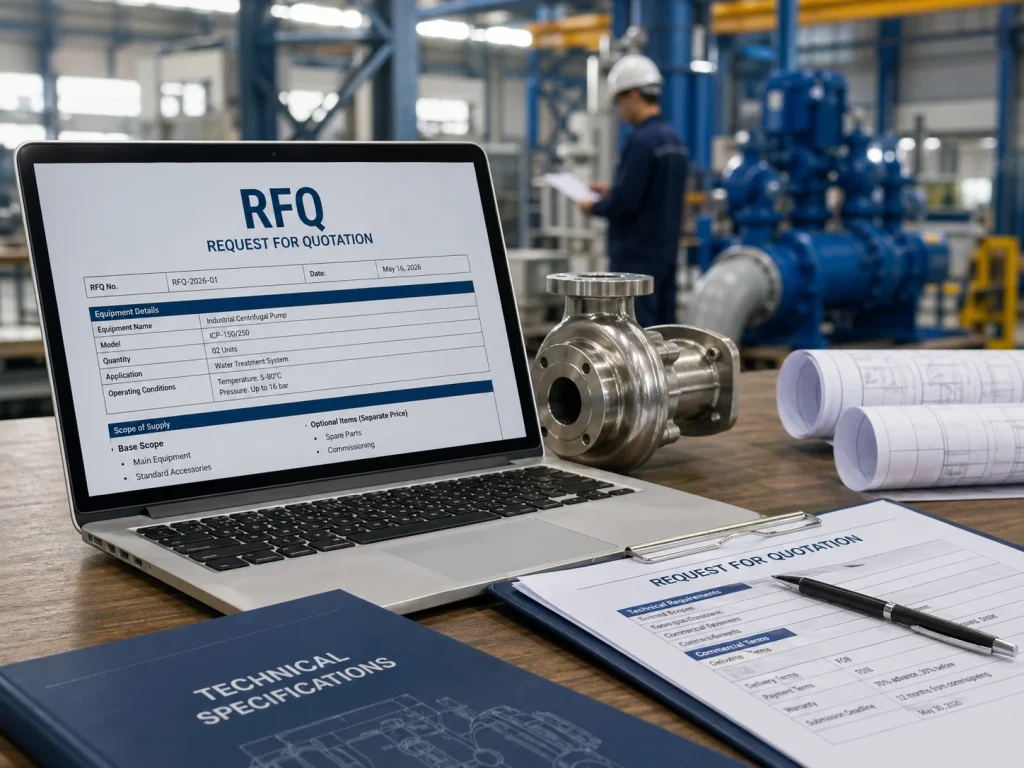
RFQ is ideal for standardized items with clear specifications and comparable suppliers.
RFP is more suitable for complex services, engineered solutions, or packages where methodology matters.
Formal tenders or ITTs are common in highly governed or high-value procurements where process transparency is essential.
Framework agreements or blanket purchase orders help stabilize recurring MRO or service requirements.
Sole source awards may be necessary for OEM spare parts or proprietary interfaces, but they require stronger commercial and governance controls.
The key principle is simple: the procurement method should match the risk, value, and complexity of the requirement.
The End-to-End Industrial Procurement Process
Industrial procurement is best managed as a controlled lifecycle rather than a one-off buying event.
1. Need Identification and Planning
Every successful procurement begins with a clearly defined need.
This stage includes:
- understanding the operational or project requirement
- confirming budget availability
- defining timeline and criticality
- identifying long-lead items early
- selecting the appropriate procurement method
Good planning prevents most downstream failures.
2. Specification and Scope Definition
This is one of the most important stages in the entire procurement process.
The buyer must clearly define:
- performance requirements
- material and technical standards
- operating conditions
- interfaces with other systems
- inspection and testing requirements
- documentation deliverables
- scope boundaries and exclusions
Poor specifications are one of the biggest causes of procurement disputes, rework, and cost overruns.
3. Supplier Discovery and Prequalification
Not every supplier is suitable for every industrial requirement.
Prequalification helps filter suppliers based on:
- technical capability
- relevant experience
- certifications and QA systems
- manufacturing capacity
- HSE record
- financial strength
- compliance readiness
For critical packages, site audits and capability assessments may also be required.
4. RFx and Bid Management
Once requirements are defined and suppliers are shortlisted, the buyer issues the appropriate RFx.
This may be:
- an RFI for market intelligence
- an RFQ for clear and comparable requirements
- an RFP for complex solution-based procurement
- a formal ITT for large or highly governed packages
A strong RFx package includes technical scope, commercial terms, delivery requirements, documentation expectations, evaluation criteria, and compliance obligations.
5. Evaluation, Negotiation, and Award
Industrial procurement decisions should never be made on price alone.
Evaluation should cover two dimensions:
Technical evaluation
- compliance with specifications
- deviations
- manufacturability or service methodology
- QA/QC approach
- HSE capability
Commercial evaluation
- total landed cost
- payment terms
- lead times
- warranty
- risk allocation
- lifecycle implications
A good rule is to negotiate in risk order, not price order. Resolve delivery risk, technical deviations, documentation obligations, and warranty issues before focusing on price.
6. Contracting and Order Placement
At this stage, procurement moves from evaluation to enforceable commitment.
Contracts and purchase orders should clearly define:
- scope and technical hierarchy
- documentation requirements
- inspection and acceptance criteria
- delivery terms and risk transfer
- warranty obligations
- change order process
- payment structure
- compliance and ethics requirements
In industrial settings, contract clarity is one of the strongest protections against disputes.
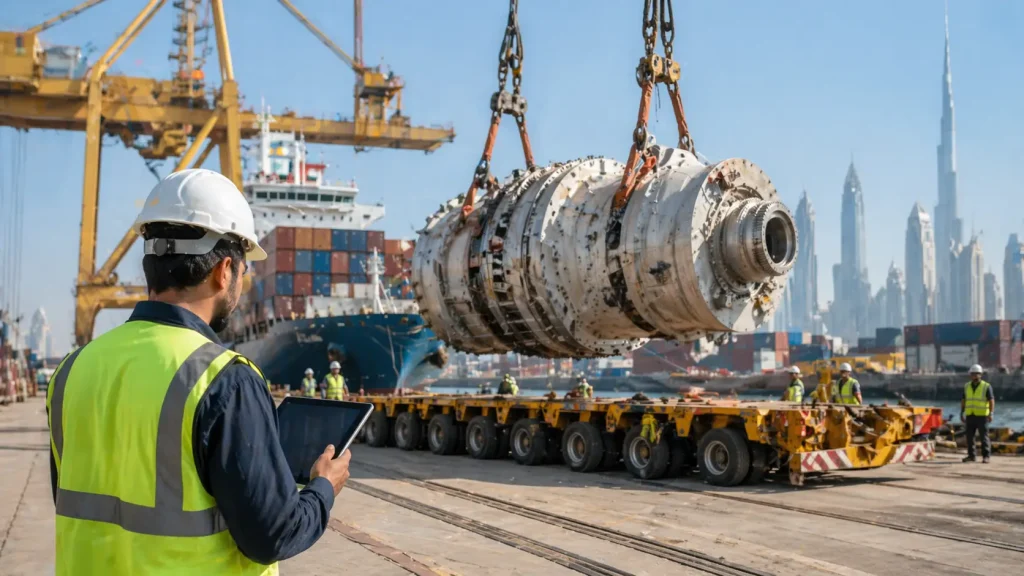
7. Delivery, Logistics, Inspection, and Acceptance
This is where industrial procurement becomes highly execution-driven.
Key activities include:
- expediting supplier progress
- monitoring manufacturing or mobilization milestones
- preparing logistics and customs documentation
- receiving and verifying goods
- checking traceability and certificates
- performing FAT, SAT, or field acceptance where required
For imports, documentation quality is often as important as the physical goods themselves.
8. Invoicing, Payment, and Closeout
Payment should only happen after proper verification.
A disciplined closeout process includes:
- three-way matching between PO, receipt, and invoice
- confirmation of acceptance and documentation completeness
- release of milestone payments based on evidence
- collection of manuals, as-builts, warranties, and spare parts data
- updating supplier scorecards and performance records
9. Supplier Performance and Continuous Improvement
Mature industrial procurement functions do not stop at payment.
They continuously monitor suppliers through KPIs such as:
- on-time delivery
- quality acceptance rate
- documentation accuracy
- responsiveness
- safety performance
- issue resolution speed
Strategic suppliers should be reviewed regularly and developed over time through structured supplier relationship management.
Common Procurement Challenges in Industrial Projects
Industrial procurement failures are usually predictable. They tend to come from the same recurring patterns.
Unclear Specifications
Ambiguous, incomplete, or conflicting requirements create supplier confusion, wrong pricing, nonconforming delivery, and claims.
Best practice:
Define a single source of truth for specifications, document hierarchy, and acceptance criteria.
Supplier Capability Gaps
A low-price supplier may lack the technical capability, capacity, or financial stability needed to deliver.
Best practice:
Use prequalification, reference checks, audits, and critical supplier due diligence.
Long Lead Times and Schedule Slippage
Late engineering, delayed approvals, and weak expediting often push long-lead items off schedule.
Best practice:
Create a long-lead register early, assign expediting ownership, and monitor milestone evidence.
Quality Failures and Rework
Inadequate QA systems, poor traceability, and weak inspection planning lead to defects, NCRs, and costly rework.
Best practice:
Use ITPs, hold points, supplier audits, third-party inspections, and formal deviation control.
Cost Overruns
Unit price is often misleading. Hidden logistics costs, change orders, demurrage, FX exposure, and lifecycle costs can significantly increase final spend.
Best practice:
Evaluate total cost of ownership and enforce disciplined change control.
Contract Disputes
Unclear scope, weak notices, inconsistent documentation, and poorly defined acceptance conditions create avoidable disputes.
Best practice:
Strengthen contract drafting, approval discipline, and recordkeeping.
Logistics and Documentation Errors
Incorrect Incoterms, missing certificates, customs errors, or weak coordination between supplier and logistics provider can block delivery.
Best practice:
Embed document requirements and logistics responsibilities into RFx packages and contracts from the start.
Compliance and Ethical Risks
Industrial supply chains can expose buyers to conflicts of interest, corruption, sanctions risks, or non-compliant sourcing.
Best practice:
Apply strong governance, segregation of duties, compliance clauses, and auditable decision-making.
Sustainability and Responsible Sourcing Pressure
Many industrial buyers now expect suppliers to address ESG, environmental performance, labor standards, and responsible sourcing practices.
Best practice:
Integrate sustainability criteria into supplier assessment and sourcing decisions, especially for strategic or high-risk categories.
Best Practices for Industrial Procurement
The most effective industrial procurement teams tend to share the same operating habits.
1. Define Requirements Properly
Most procurement problems begin upstream. Invest time in scope, specs, and documentation before going to market.
2. Match Procurement Method to Risk
Use RFQ, RFP, tender, framework, or sole source only when it fits the requirement and risk profile.
3. Qualify Suppliers Before You Need Them
A prequalified supplier base is one of the strongest defenses against delay and poor quality.
4. Evaluate Total Value, Not Just Price
Look at quality, reliability, schedule, lifecycle costs, and commercial risk — not just quoted price.
5. Use Contracts as Execution Tools
A contract should not just protect legally; it should actively support delivery, acceptance, and dispute prevention.
6. Build Inspection and Expediting Into the Process
For critical equipment or services, QA/QC and progress monitoring must be planned — not improvised.
7. Digitize Where It Improves Control
Digital procurement workflows can improve transparency, approval discipline, audit trail quality, and cycle time.
8. Measure Supplier Performance
Supplier performance should be visible through data, not assumptions.
9. Align Procurement, Engineering, and Operations
Cross-functional alignment is essential. Procurement cannot succeed in isolation.
10. Treat Risk Management as a Core Procurement Discipline
Industrial procurement is risk management in practice. The stronger the risk controls, the more predictable the procurement outcome.
UAE-Specific Considerations
In the UAE, industrial procurement often involves both local sourcing and imports, which adds another layer of operational and compliance complexity.
Key considerations include:
- verifying supplier legitimacy through official registries and directories
- checking whether suppliers are properly licensed for the required activity
- understanding free zone vs mainland implications
- managing import documents such as invoice, packing list, certificate of origin, and HS code data
- requiring MOIAT conformity certificates for regulated products where applicable
- accounting for ICV-related requirements in sectors influenced by government or national procurement programs
- confirming digital procurement platform readiness when dealing with federal or Dubai government ecosystems
For UAE-based sourcing, supplier due diligence should include not just commercial capability, but also regulatory readiness and documentation discipline.
Final Thoughts
Industrial procurement is not a back-office purchasing function. It is a strategic, risk-sensitive discipline that directly influences project success, operational continuity, quality performance, and commercial outcomes.
When done well, it protects cost, schedule, quality, and compliance at the same time.
When done poorly, it creates exactly the opposite: delays, disputes, rework, hidden costs, and avoidable risk.
The core principle is simple: